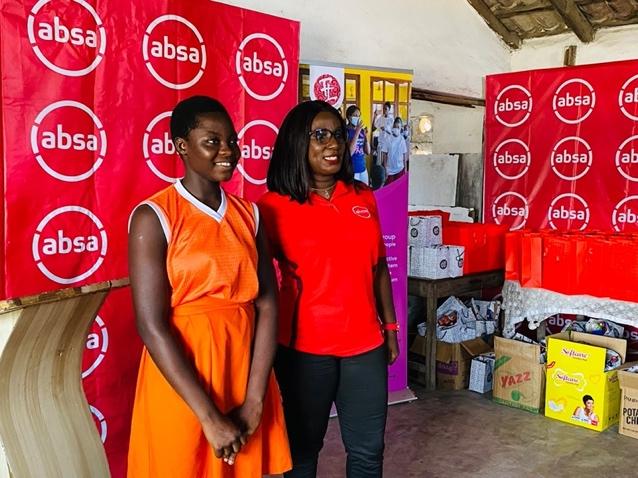
The Absa Bank Women in Risk (WiR) team believes in making a positive impact within their sphere of influence, and this requires that one goes out of their way to be a #Force4Good.
As part of their service to society, the Absa Bank WiR collaborated with the FHL Group to reach over 150 young people with capacity building and reproductive and menstrual health information. The ABSA Women in Risk engaged with the FHL Group to support the identification and design of a capacity-building programme for young girls living in underserved communities. The New Universal and Extra’ O’ Preparatory Schools were identified as beneficiary schools for the programme. These schools are located in slum communities and attended by some young people with family backgrounds with varying social issues, including teen mothers and school dropouts. Thus, these young ones do not always have ideal role models to depict alternative behaviours to prevent situations that may truncate their future and keep them from realising their full potential.
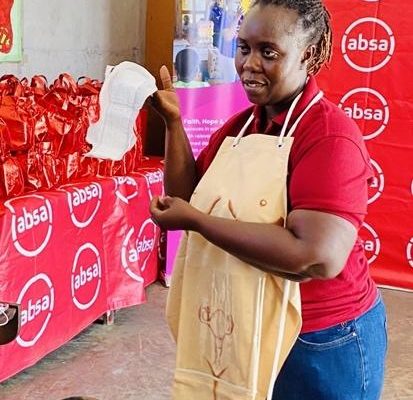
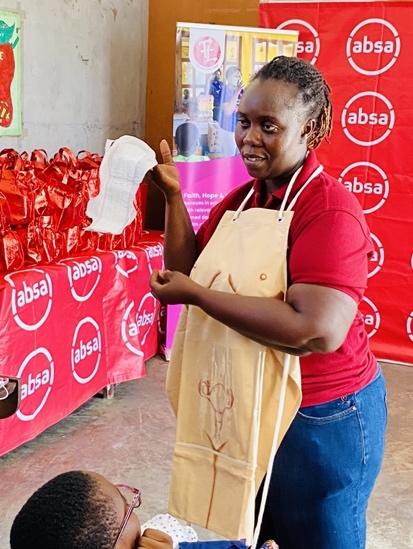
A facilitator for the reproductive health session, Ms. Antoinette Da Rocha, engaged with the adolescent boys on their reproductive health and personal hygiene. She also engaged the teenage girls in menstrual hygiene sensitization. Various sanitary products, menstrual pads, menstrual cups, disposable panties, reusable sanitary pads, and tampons were introduced to the students. The session was very interactive, with one student asking how the reusable sanitary pad is used and how it is kept clean and safe. She explained by saying, “When the reusable pad is soaked with blood after use, it is advisable to rinse immediately with cold or tepid water. If you are still in school, find a plastic bag and store it in it until you get home, and rinse if you cannot rinse immediately. Soak heavily stained pads in water with any washing detergent or powdered soap. Wash afterward and ensure to air dry it under the sun. If possible, always iron the pads before use.”
They were fascinated at the sight of the menstrual cup. Ms. Da Rocha explained how the menstrual cup is used and hygienically maintained. There was a lot of interaction and very insightful questions asked by the young girls.
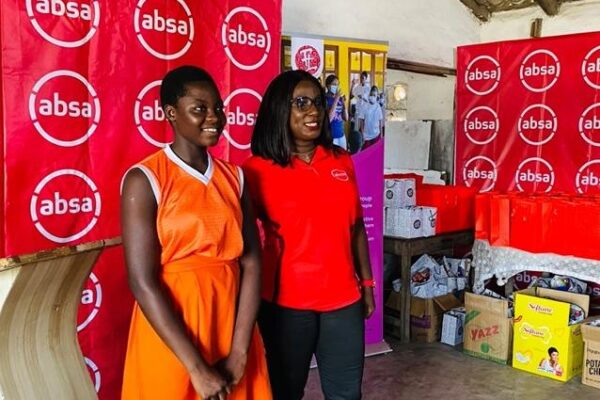
Ms. Annie Aborah and Mr. Cyril Nai, the Chairperson of Absa WiR and Absa Ghana Communications Manager, respectively, were present. They spent quality time speaking to the young ones about being assertive, working hard to fulfill their dreams, and ultimately being forces of good in their communities.
The team then moved to the Extra’ O’ Preparatory school, where the same engagement was held. The young girls were very engaged in the information session on menstrual hygiene. They asked insightful questions and shared personal experiences as the conversations continued. One very heart-warming occurrence was when Kevin, a young student, after the entire interaction said, “I know a little bit about menstruation because I have sisters. My sisters have been complaining about the cost of sanitary pads lately. They have started using toilet rolls during their periods. They sometimes come home with blood stains on their school uniforms, and it is clear that the toilet roll is not working well.”. He then asked, “Can the government ask all the sellers to reduce the price?”. This may sound far-fetched, but only possible if the government considers taking off the tax on sanitary pads.
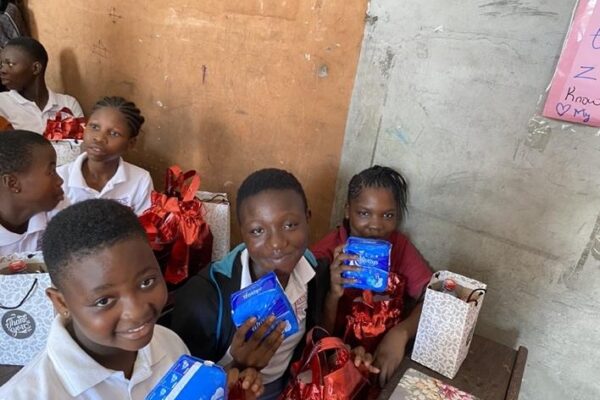
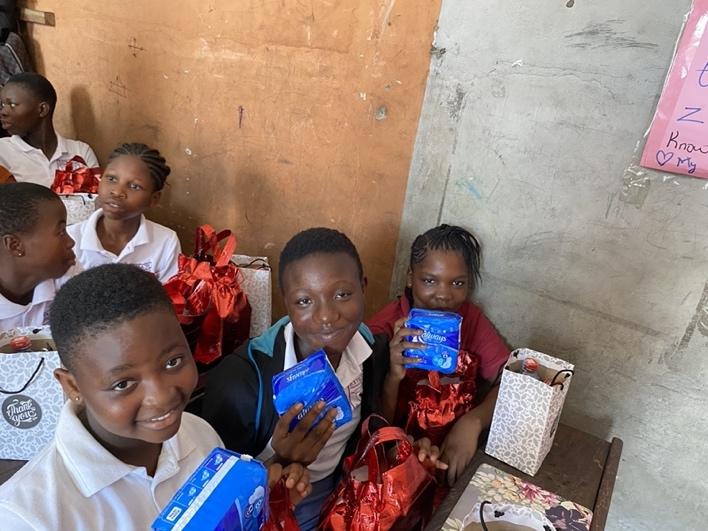
These sessions were crowned with donating sanitary pads to the young girls present. Over 300 sanitary pads were donated to about 100 young girls between the two schools.
It was a successful engagement, and we look forward to further impacting projects.