
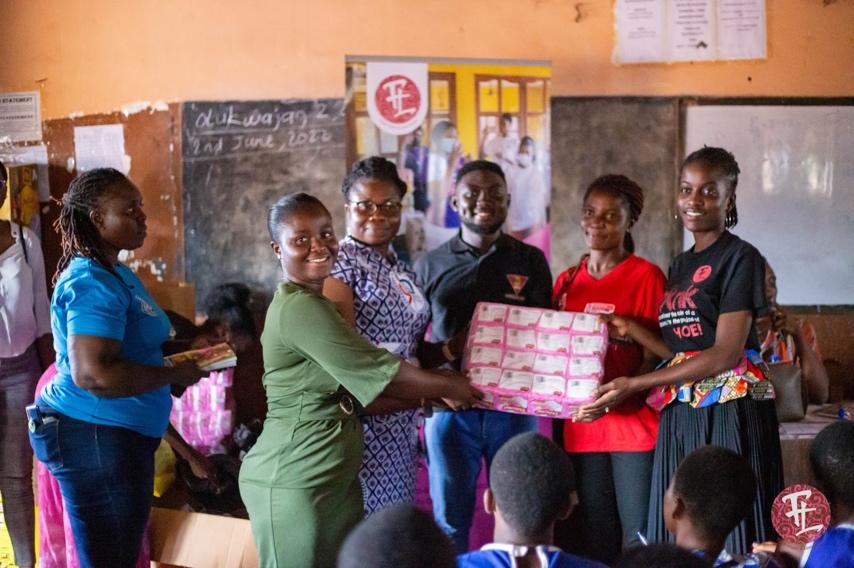
In commemorating Menstrual Hygiene Day, which falls May 28, the FHL Group Africa, in collaboration with the Youth Action Movement-Accra (YAM – the youth wing of the Planned Parenthood Association of Ghana (PPAG), organized a capacity building and information session on menstrual hygiene for over 250 young girls. This intervention resulted from a request for assistance from the Girl’s Coordinating Officer at the Lartebiokorshie cluster of schools, specifically the Lartebiokorshie Presby JHS.
FHL Group worked on this project with YAM, SheDecides Ghana, and the Ewura Initiative. The groups encouraged adolescent girls to practice proper menstrual hygiene and advocate for the removal of taxes on menstrual products to make them more accessible to teenage girls. These organizations have been actively involved in the advocacy and conversations against the “Period Tax” on sanitary pads.
The young girls were taken through the entire menstruation cycle, after which they were taken through the importance of menstrual health and proper management of their bodies and hormones during their menstruation in smaller intimate groups. Trained female facilitators facilitated the breakout session from the different organisations. The team did this to ensure we created a safe space for the young girls to share any pressing issues they may face. The sessions were very interactive.
Afia, a 15-year-old student in junior high school – level 2, shared, “I did not understand how I felt during my menstruation at times. I could be very sad one time and happy the next moment, and I could get very easily upset with my classmates and family. Now I understand that many hormonal changes occur during my menstruation, so I need to be careful of my emotions during my time of the month.”
The activity culminated in donating sanitary pads to the young girls present to help relieve the burden of purchasing sanitary pads for the next month. For many of the young girls present who come from underprivileged homes, the high cost of sanitary pads in the year makes it very challenging for them to buy them. They sometimes have to choose between buying lunch during break or saving their monies to purchase the sanitary towel. Others sometimes skip school during their periods and miss out on lessons. Suppose the ‘luxury tax’ placed on sanitary pads is taken off; it will help relieve the financial burden on many of these young girls.


